
Categories: Teacher Experiences & Reflections
A Practice of Paradox
It is physical and spiritual.
It is ancient and ever new.
It is a meditation done with the eyes open.
It is movement interspersed with stillness.
It is grounding and uplifting.
It is calming and energizing.
It is repetitive but never routine.
What is it? It is T’ai Chi Chih (TCC), a meditative form of T’ai Chi, originated in 1974 by Justin Stone, and now experienced by many. If you had asked Justin to explain these paradoxes, he would simply advise, “Don’t analyze them, experience them.”
He called it the “effort of no effort.” You have seen it. You know how it feels — when a runner moves effortlessly, when a basketball player is in the flow. There is no conscious trying as the runner or the player enters an energy space and moves with it.
Justin spent time learning embodied spiritual practices from the Masters. He then captured the essence of those practices and created a simple, accessible that anyone willing to practice can experience. has 19 movements, often repeated several times on the left and then the right. The practice has spread worldwide since it was first offered.
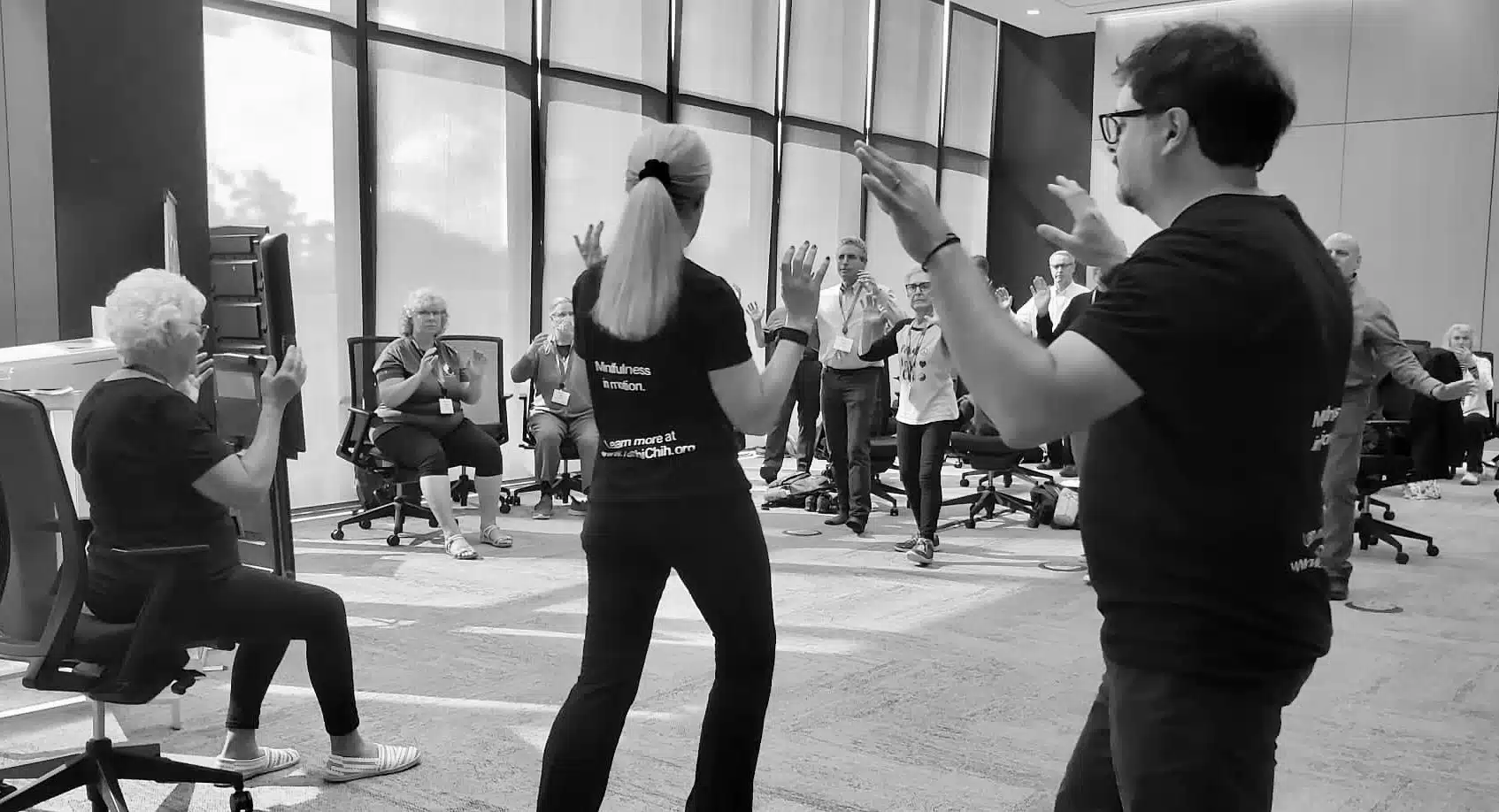
A few simple principles define the practice. The movements are done softly and slowly. The arms are moved by the weight shifting from the front foot to the back foot. Each movement is done continuously and then pauses for a moment of stillness so the energy can settle. Attention is placed on the soles of the feet.
Don’t let the simplicity fool you. The ancient underpinnings of the practice give it a power that can be transformative. The physical benefits have been researched: improved balance, increased energy and stamina, a sense of calmness. The spiritual benefits are left to each person to experience — over the course of a few weeks or the course of a lifetime. It is not unusual for a person to be unaware of changes that have occurred. It often takes an observer to comment on the person ‘s gentle, joyful movement through each day.
TCC is a practice of the paradox — supporting one’s movements through the paradoxes of life.
Topics: California, Chi and Intrinsic Energy, Justin Stone's Teachings, Softness and Continuity, Weight Shift
Originally appeared in: November 2023