
Adaptive TCC
Adaptive T’ai Chi Chih, that is what seated TCC is to me. We take TCC and adapt it to a person’s abilities. There is no one size fits all or just one way. There is a general blueprint: the movements of TCC that Justin Stone developed. Then we use the principles that are imbedded in the form of TCC to guide our variations to enabling someone to work with the practice to the best of their ability.
How can we stay true to the practice of TCC but at the same time tweak it in order for folks who can’t stand or have limited use of part of their body to access the practice? Justin felt the practice of TCC heightened his creativity. Teaching seated TCC calls upon a teacher’s creative side to expand.
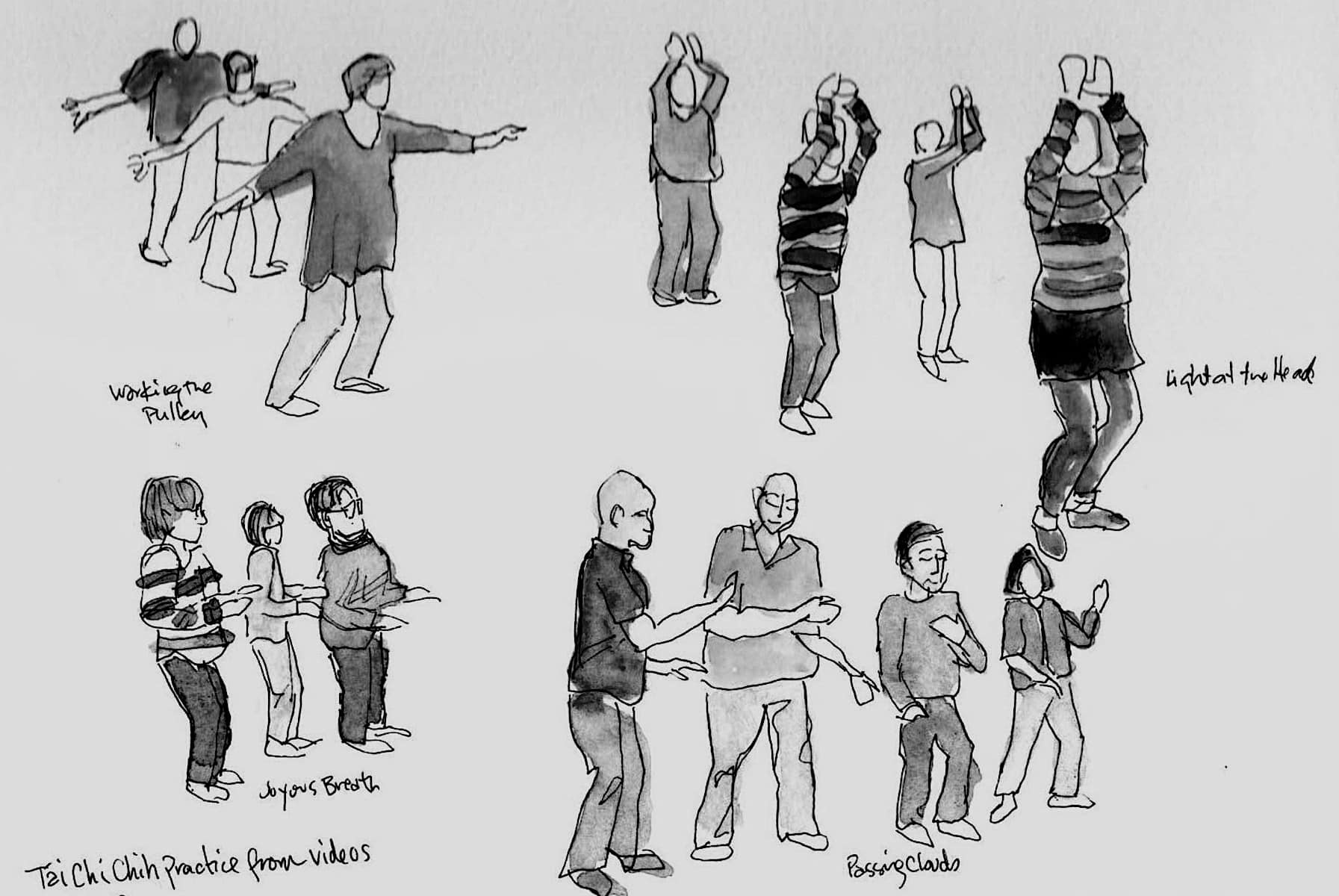
When I filmed a seated TCC DVD several years ago the main focus was in showing a way to move the body to simulate a weight shift sitting down and then include the arm/hand patterns of TCC along with the movement of the body. I wanted the seated practice to be as close to the standing practice as possible and for this reason I left out two movements: Anchor Taffy and Working the Pulley.
My concern regarding Working the Pulley was that half the arm/hand pattern goes behind the body as it turns from the waist. There is no way to do this comfortably sitting in a chair which usually has arms or a back to contend with. Sitting down as one twists the upper body was a concern that people would strain their back. In hindsight it would have been better to adapt the movement and do all the arm/hand pattern in from of the body without the twist, just shifting the weight forward and back.
With Anchor Taffy the forward pull and the side pull felt too much alike and my concern with the forward pull was people sitting down might lean forward too much. After more years of working with seated TCC I feel both of the movements should be included in the practice with adaptations to make them safe and comfortable.
Adhering to the principles of circularity, softness, continuity, and flow (yinning and yanging), seated TCC practice produces the same results in the body as standing practice. The energy is stimulated, circulated, and balanced. In teaching it is important to assess a student’s stamina and tailor the practice not only to their physical ability but to their endurance. Perhaps six repetitions would serve them better than nine.
When teaching, try the adaptation yourself that you are asking the student to do. I found this to be helpful when I had asked a student to try a movement in an altered way and they were having trouble with it. I sat down and did what I was asking them to do, trying to move with their limitation and then realized why they were having trouble. I then changed my approach.
It has been interesting over the years to hear from teachers the ways they have adapted the practice in teaching, and to hear the surprise when they talk about how much energy they felt doing it seated. It is just one more teaching tool to have in our box, and you never know when you might need to teach or do seated TCC.
Topics: