
Conference Talk At The 24th Annual 2009 Conference
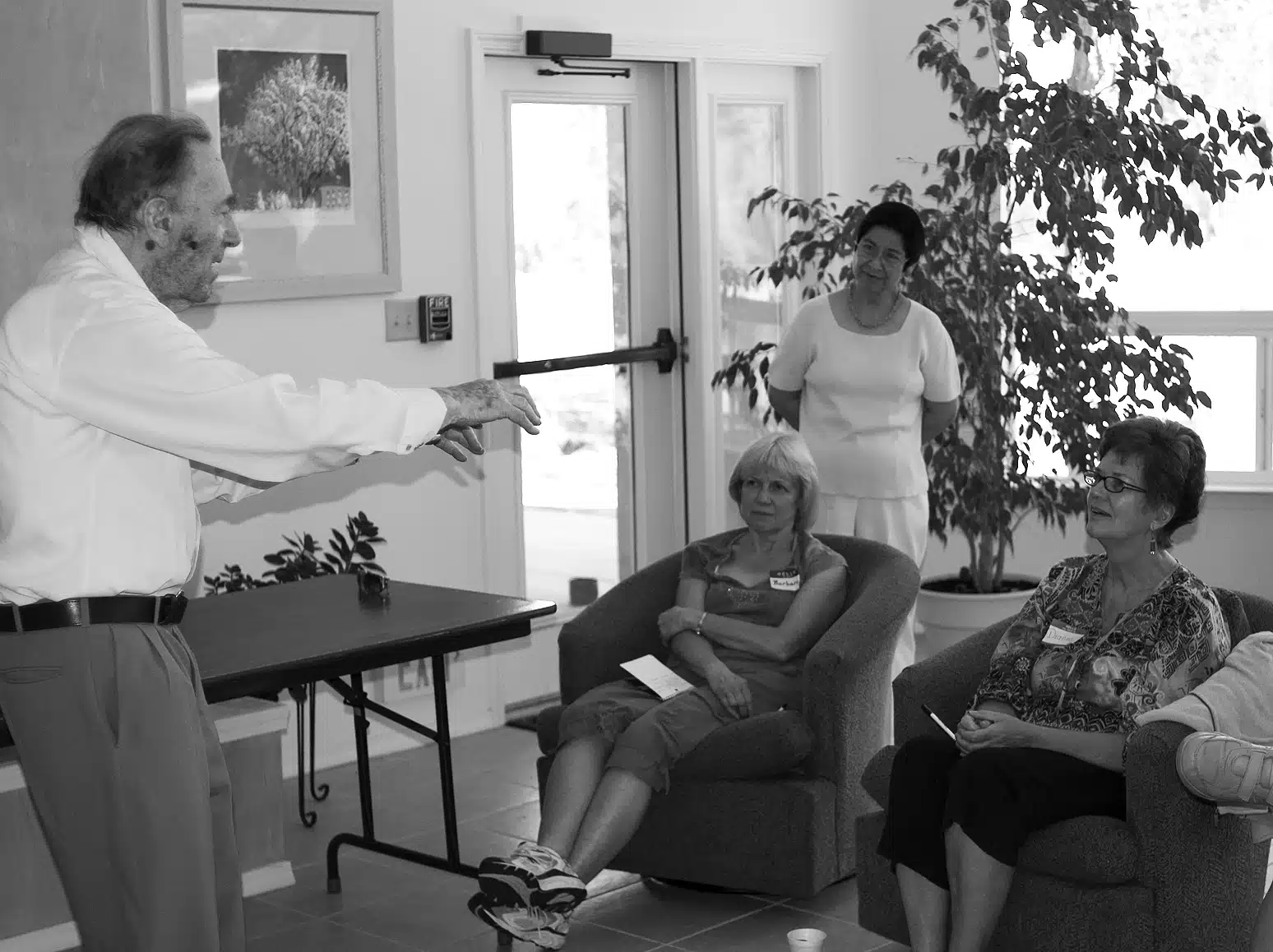
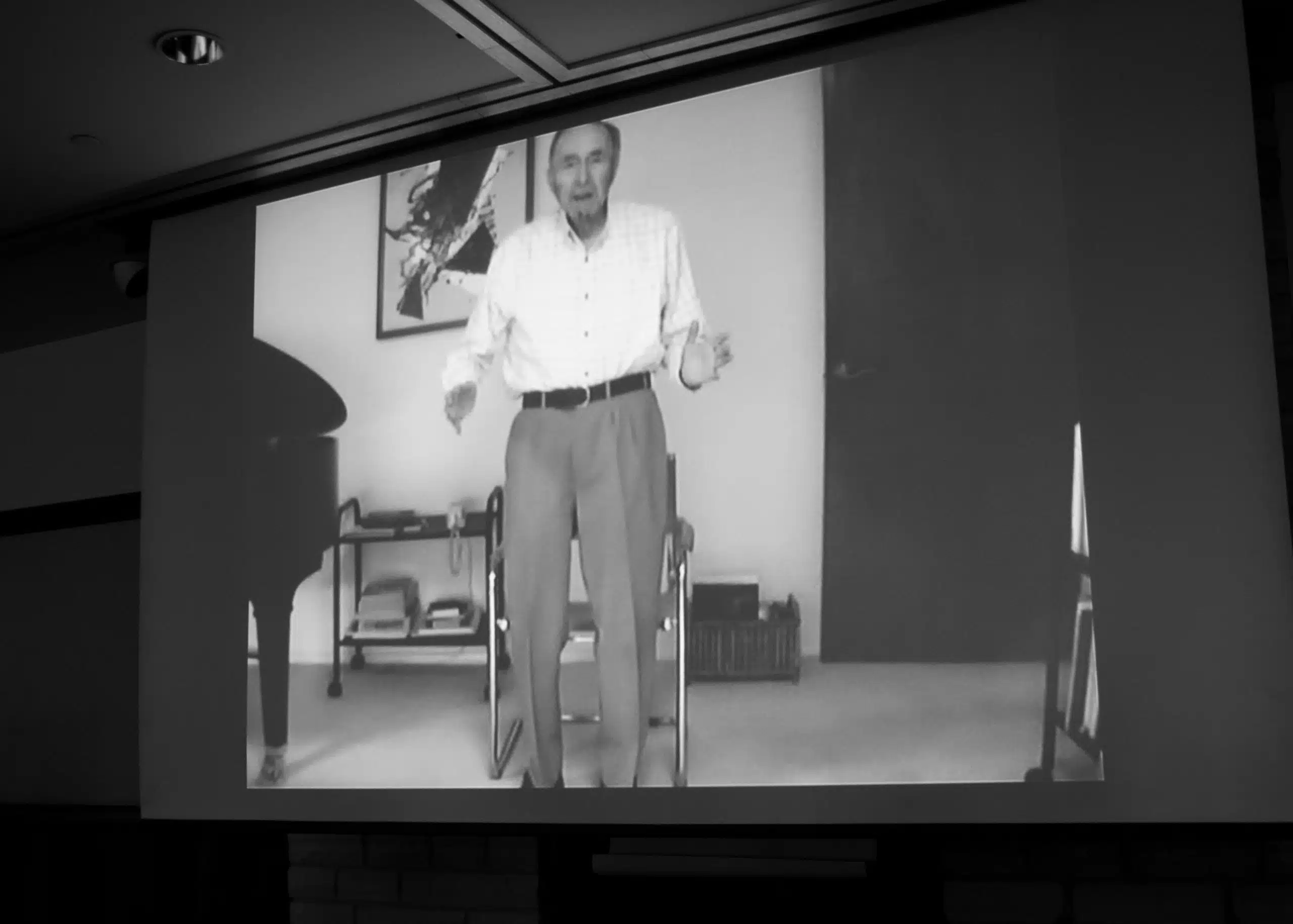
Greetings to everyone. T’ai Chi Chih has brought us all together. What I want to do in this short video is talk to you about four different TCC movements that I think, as teachers, you have to be well aware of and do conscientiously.
The first one is Pulling Taffy. In this movement, I’ve noticed a good many people go only part way and, actually, the movement out and the hand up to the sun are very important. (I’m sorry to have a 92-year-old doing this for you, but perhaps you’ll get the idea.) This hand goes out to the sun and the right hand goes down along the leg. Then we go to the other side; notice the hand is out here turned up to the sun. This is not Pulling Taffy. This is Pulling Taffy. [Justin demonstrates the right way to do Pulling Taffy.] Don’t forget that the back hand goes down along the leg. So there are four different movements in it, including a hand out and turned up to the sun. The reason I mention this phrase, “hand turned up to the sun,” is because it’s good to have in your mind a key that tells what the movement is like. So if you remind students that the hand goes out turned up to the sun, I think they’ll get the idea of Pulling Taffy.
The second problem involves two movements. In Carry the Ball to the Side, you want to use your wrists and not your arms. I see this all the time [Justin demonstrates Carry the Ball to the Side]. That is not Carry the Ball to the Side. Make sure that your students understand that it is not an arm movement; the arms have to move a little bit, of course, but the wrists turn.
The second thing to remember is that Carry the Ball to the Side means that you are carrying a ball and a ball is round. Therefore, your hands must be cupped to have that happen. In Bass Drum the hands are about a foot apart, and the wrists do the work. The most important part of this movement is that it takes place below the waist. Unless the teacher gets across the idea of the shifting of the weight, the yinning and yanging, the whole movement is wasted. When you go forward, your weight shifts forward and the back leg straightens. When you come back, the back leg is bent and the front leg is straightening. So in Bass Drum and Carry the Ball to the Side, you must remember that the wrists do the work.
Perhaps the most important feature of TCC is yinning and yanning. In the yinning and yanging, the positive and negative means the weight-shift. But when the weight is shifted, the top of the body does not go forward. The top of the body is straight. TCC is done mostly below the waist. So whatever movement you are doing, your back leg is stiffening and your weight is shifting forward, but the top of your body is not shifting forward. This is incorrect. This is correct. [Justin demonstrates Around the Platter.] The back foot is straightened out, and the top of the body is straight up and down. (Naturally it has to move a little bit.)
For those of you who are taking notes, I go over these four things in the hope that you will remember them and practice them here at the summer conference.
The first thing was Pulling Taffy: the hand goes out to the side and is “turned up to the sun.” [Justin demonstrates Pulling Taffy and its variations.]
The second thing we want to remember is in Carry the Ball to the Side and Bass Drum. In Bass Drum the hands are about twelve inches apart and they stay that way throughout the movement. But the most important part of the movement is in the yinning and yanging below. [Justin demonstrates Bass Drum.] Notice the wrists. It’s the same thing with Carry the Ball to the Side; the wrists are doing the work. [Justin demonstrates Carry the Ball to the Side.] When you go sideways you can’t do the full yinning and yanging that you do when you go forward and backward. Obviously, the knee bends and the weight shifts, but it’s not exaggerated the way it is if you’re doing this. [Justin demonstrates Around the Platter.] So use the wrists on Carry the Ball to the Side and Bass Drum. Be sure that you do the yinning and yanging correctly with it. Hands are about a foot apart and the weight must shift – but the weight shifts from below the waist.
The last thing I tried to get across to you, and perhaps the most important thing, is the yinning and yanging. When you go forward, that is yang because the weight is shifted forward and it becomes positive. So the weight is shifted to the left foot and when it comes back, the weight is shifted to the back foot. Yinning and yanging must be taught because at the beginning, students are going to be concentrating on what their arms are doing – which is simply a muscular exercise.
So Pulling Taffy: “out to the sun.” Carry the Ball to the Side: the hands are cupped. Once again the yinning and yanging are most important. I’ve tried to emphasize these few points because to be a good teacher you have to be at home with getting across to the student what your hands do, what your weight is doing and so forth.
Again, Pulling Taffy: hand out to the side. That phrase “hand turned to the sun” will help you get across what should be done. In the case of Carry the Ball to the Side, remember that you are carrying a ball, which is round and so the hands are cupped. The work is done by the waist.
These are just four points, but if you remember them and do them correctly… You also have Pam, Sandy, Sr. Antonia and a lot of experienced teachers here to help you with it. To be a good teacher you must know what you are going to say when you are first teaching a particular movement. I’m sure all of you are going to turn into good teachers and you’re going be very successful teachers. Thank you.
>>>>>>>>>


Topics: