
Categories: Teacher Experiences & Reflections
Help For PTSD
By: Andrea Skillman
North Chicago, Virginia
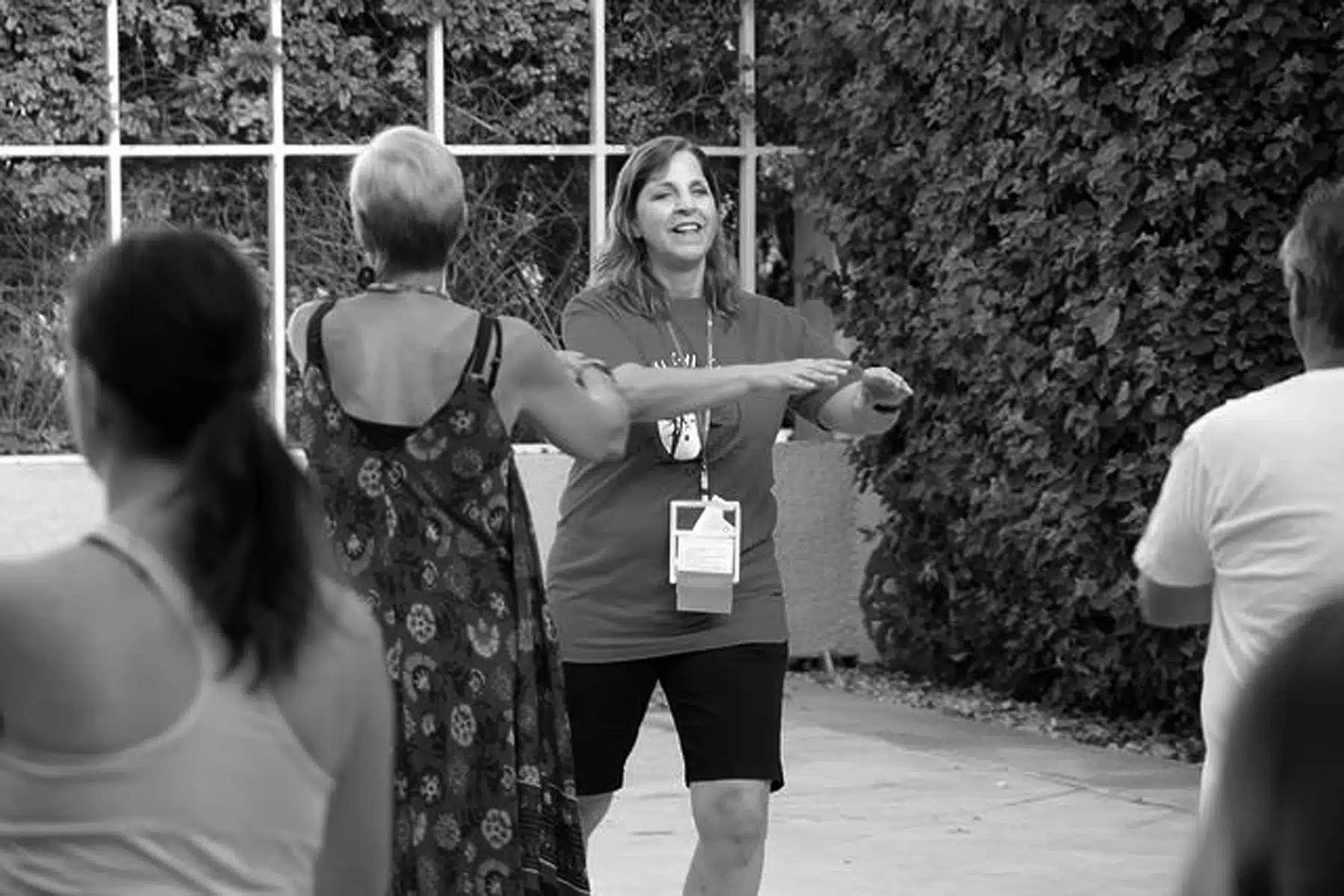
Update: I teach T’ai Chi Chih in a variety of settings including, for at least 15 years, annually at the Holistic Nurse Conference. It turns out my early morning TCC exercise is one of the most popular morning classes. I have also been teaching TCC for our in-patient PTSD group at the Veteran Affairs (VA) in North Chicago for the past year and collecting data, below, which showed it to be a highly successful venture. And I may soon be teaching at four VA sites simultaneously. Oh and I have been teaching TCC for our Pain School for the past seven years as well. Growth is nice.
1-hour TCC class for Post-Traumatic Stress Disorder (PTSD), May 2017 – Present
Below are the strong results for the TCC class taught every other week for the past year. This class is for the PTSD In-Patient treatment group at James A. Lovell Federal Health Care/ North Chicago, Virginia. Some modifications were made as the teacher initially found the PTSD Veterans were unable to settle-down enough to participate in TCC fully. Additions were made to net a very functional and beneficial class that increased the proportion of PTSD Veterans who were able to settle enough to fully engage in this activity.
• Each class consists of five minutes of self-tapping, using Bio-Destress. This modality consists of tapping the ends of meridian lines used in acupuncture. Bio-Destress tapping includes the well-known and studied Emotional Freedom Technique (EFT) sites that the VA has approved for widespread usage. PTSD Veterans mirror the instructor.
• PTSD Veterans then participate in 40-45 minutes of TCC either standing or sitting, and they mirror the instructor.
• This is followed by 10-15 minutes of a guided Mindfulness Meditation Practice.
Participants fill out a before and after questionnaire (using a 1-10 scale with 1 being low and 10 high) and self-report data on five key areas known to cause trouble for the PTSD client: pain, racing thoughts, anger, anxiety and agitation. What follows are the results after the 1-hour class for the 67 veterans who completed both the before and after questionnaire:
Pain: 20.75% decreased after class
Racing Thoughts: 36% decreased
Anger: 26% decreased
Anxiety: 29.7% decrease
Agitation: 26.75% decreased
This clinically significant data supports the continuation of this type of class to be offered at other VAs and in the private sector more widely.
Topics: Adapting the Practice, Anxiety, Hospitals and Clinics, Meditation, Research and Studies, Veterans, Virginia
Originally appeared in: August 2018