
Categories: Teacher Accreditation & Training
Is Seijaku Separate From TCC Practice?
By: Ann Rutherford
Albuquerque, New Mexico
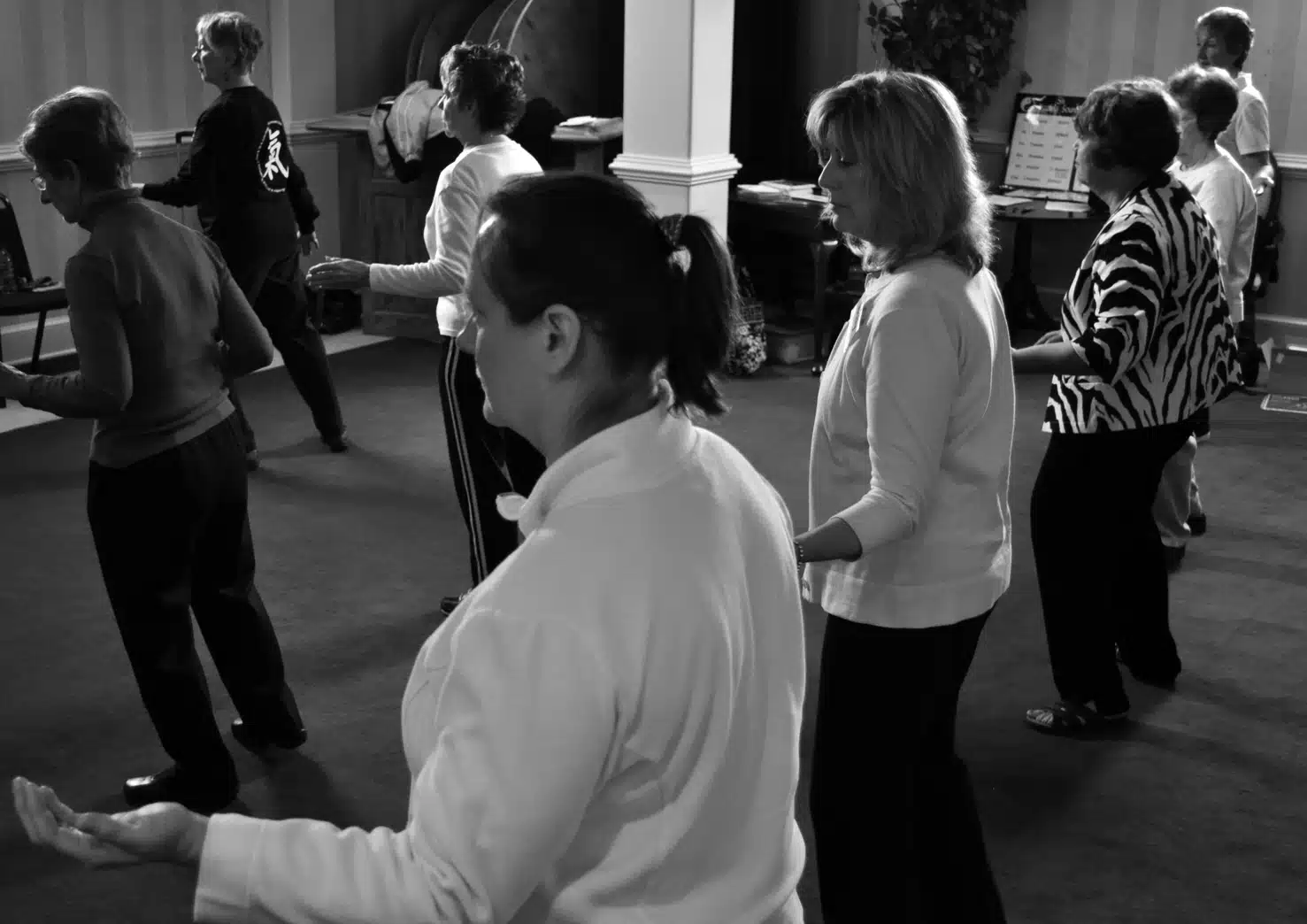
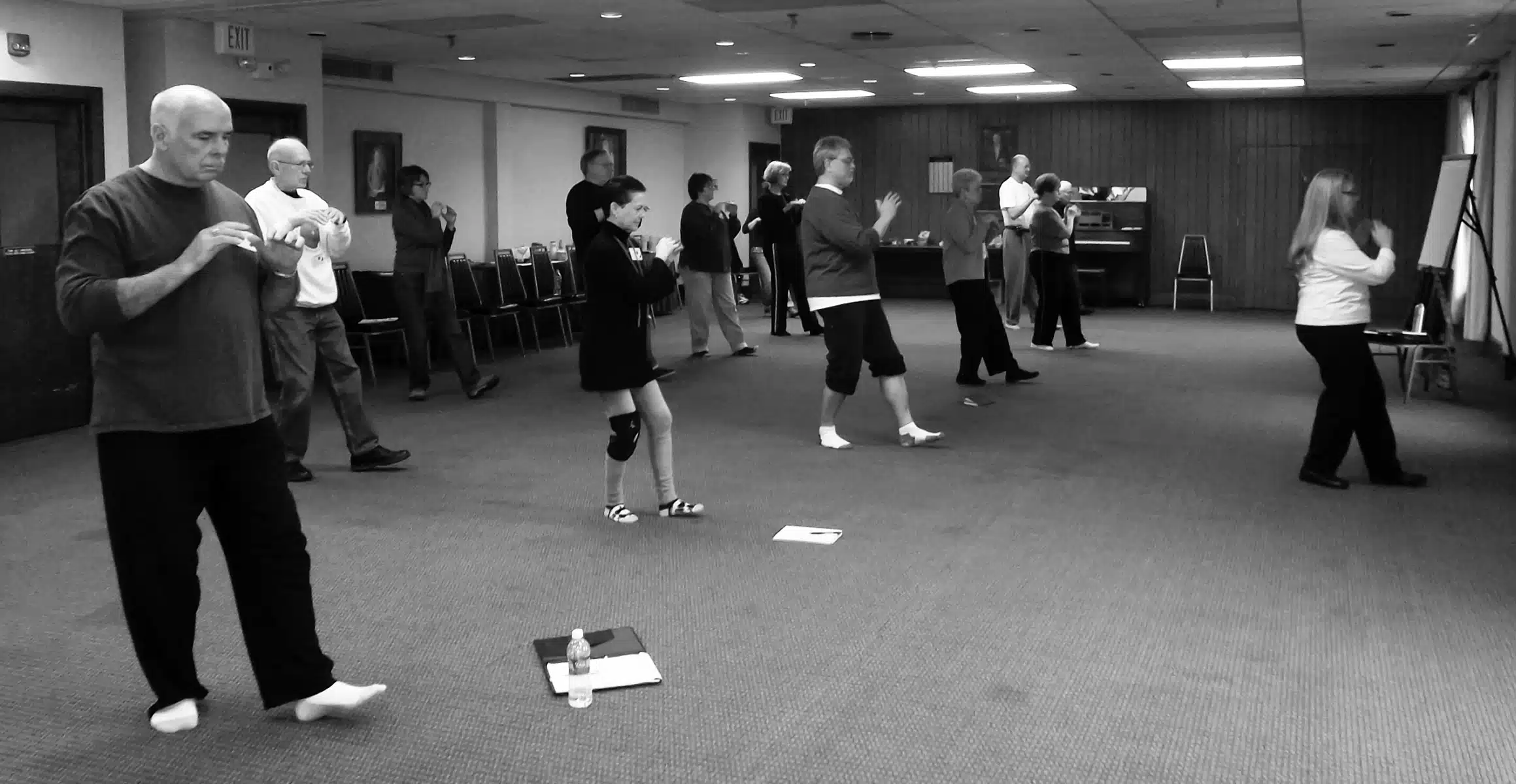
Is Seijaku practice a natural evolutionary step for serious T’ai Chi Chih teachers? At the Albuquerque Seijaku training in February, this question came up again and again. In 1989, Justin said Seijaku was created for TCC teachers’ evolution, and that it was a “a safe form of Kundalini practice as long as you’re grounded.”
One of the delights of this Seijaku training was listening to Pam read from Justin’s 1989 Seijaku training notes, which he has given her. One Justin’s stellar quotations is: “I’ve never seen anything like the power of Seijaku.” Since this was an advanced group of Seijaku practitioners, those attending could readily understand Justin’s sentiments. (The New Mexico TCC Center now offers a monthly Seijaku practice, and all the monthly Seijaku practitioners attended the training, and in fact, some of the trainees confessed to being more Seijaku practitioners than TCC practitioners). The trainees agreed with Justin that Seijaku stimulates spiritual evolution in the regular practitioner.
The trainees shared their discoveries of the benefits of Seijaku practice: softening of their TCC practices, teachings about their habit patterns, a practice that trains them in one-pointed concentration, an enabling toward expanded awareness, a tool for changing non-beneficial habits, a heightening of awareness of the tan t’ien, an increased sense of “loving myself just the way I am,” a tool to be used for intentional healing, a heightening of awareness of the weight shift, an accelerated sense of “growth of certainty.” All told, these statements added up to what Justin described as the steps leading toward an evolved and expanded state of awareness.
At the end of the training, Pam led a forum on, “What is the Future of Seijaku?” In 1989, Justin wrote, “I’ve never seen anything like the power of Seijaku.” That’s because the entire human system (mental, physical and vital force) participates in the awareness practice. Seijkau must be done in the present with full consciousness, and thus, it is not a spiritual by-pass practice: You cannot pretend you are somebody you are not. It is intense, sometimes unsettling, but it is rewarding for the serious practitioner seeking to realize universal awareness. As one trainee said, “Substitute the word ‘life’ for the word Seijaku and see what happens.”
Topics: Deepening Practice, Heightened Awareness, Justin Stone's Teachings, Mexico, New Mexico, Seijaku, Teacher Training
Originally appeared in: August 2012