
Seated TCC
When I announced that I wanted to teach Seated T’ai Chi Chih, one of my friends thought I said Seeded T’ai Chi Chih. Well, that’s not totally inappropriate, I thought, since as teachers we plant the seeds and it’s up to our students to nurture and grow their own practice. But of course, I meant teaching TCC to students who are sitting down.
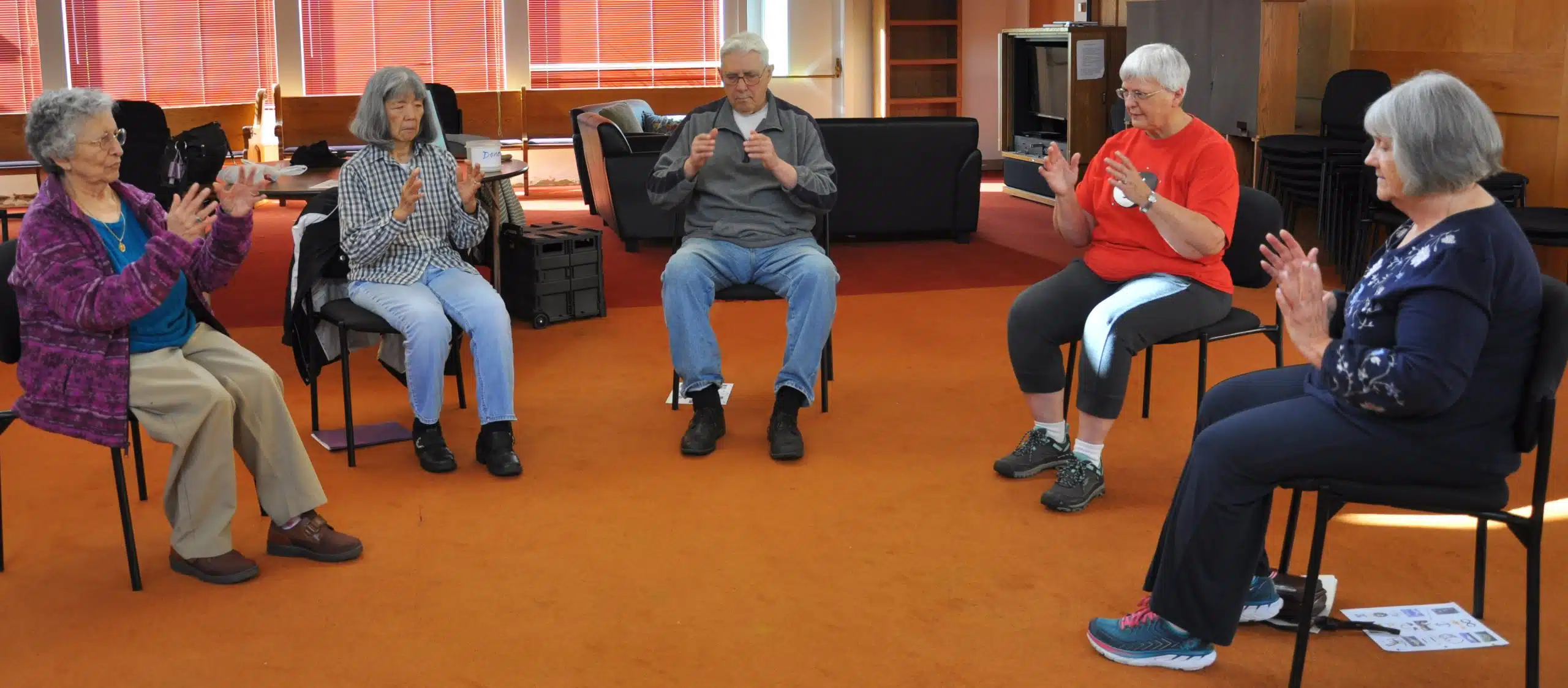
I’d been volunteering with a local nonprofit that helps seniors to age in place, and after teaching four beginning sets of classes, I realized that there were more members that could benefit from learning TCC, but were unable to depend on their bodies to remain standing while learning all the movements. The five students who immediately signed up were able to walk to some degree, but had different reasons why they wanted to learn the seated practice: bad knees, bad backs and neurological issues leading to extreme balance problems. One student had taken my beginning class, but her balance was causing her to stumble, and she had trouble standing up straight. When seated, however, she sat tall and could learn the movements without worrying about falling.
To prepare for teaching this class, I did my own practice seated for several weeks. I also watched Sandy McAlister’s DVD, which I had seen before, and checked my notes from my teacher accreditation class where we had a presentation by Lisa Otero, with a chance to practice sitting down. A knee injury also provided me other opportunities to explore.
The most valuable experience came from Albuquerque, where I attended Carmen Brocklehurst’s annual fall TCC retreat. I did the whole weekend seated and received many good tips from Carmen and some of the other teachers at the retreat. For example, at least three teachers advised me to demonstrate each movement as it was meant to be done standing, before teaching the seated version. I wouldn’t have thought to do this, but it was good advice. I also made sure that the facility we would be using was completely accessible, and had chairs without arms.
I held class twice a week for four weeks, so that we had eight, one-hour sessions. By the end of the second class, when students began to grasp some of the principles and started moving together, I was feeling more comfortable about teaching TCC in this special way. We worked together to find solutions for uncooperative body parts, sharing common experiences with good humor and grace. My students were highly motivated, and a joy to teach. I was humbled by their persistence in the face of adversity, and I wouldn’t hesitate to teach this class again if the opportunity arises.
∞ ∞ ∞ ∞ ∞ ∞ ∞ ∞ ∞
Student Comments:
As classes went on, I became more confident and relaxed in my ability to make the movements. I left each session more peaceful, the same with practice at home. I got so much out of it. – GG
I’ve learned so much about how to relax. The sitting was wonderful since I have a back problem. – TC
I had done T’ai Chi [Ch’uan] before and had to stop, but the sit-down returned the great feeling of energy that I missed. – SS
This and the previous standing TCC class helped me not to be overly anxious about things I can’t help or control. The standing class helped my balance physically and mentally. The seated class has been a great option since I’ve had some dizziness recently. – AD
Topics: