
TCC’s Yin & Yang Of The Brain
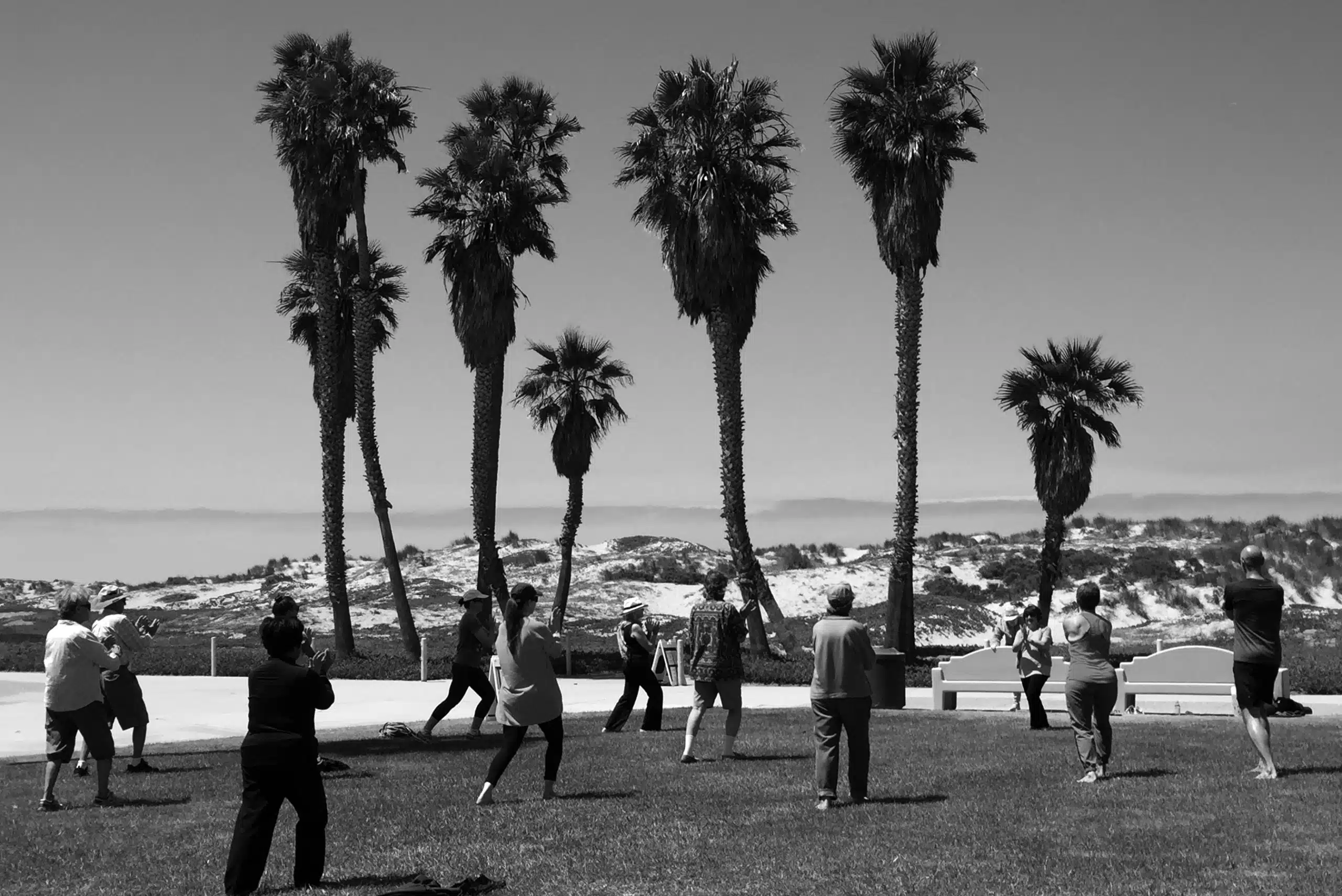
I teach a weekly, ongoing T’ai Chi Chih class at a popular health club in Arroyo Grande, California, a semi-rural area in the Central Coast region with ocean views from its hillsides, fertile soil and excellent weather. It is no wonder that this region boasts a large retired population well-integrated into the rest of the community.
My 8am Friday class attracts this older population for many reasons, and for the past almost two decades, has continued to challenge me to open my mind about how to teach people with very diverse backgrounds and physical and mental abilities. Our classes have included cancer patients, stroke survivors, post-surgical patients with more conditions than I can list here, Parkinson’s patients, people with early dementia, athletes, couch-potatoes, ex-military, machinists, scientists and former policemen. As a result, I have learned from my students more than I ever imagined I would know about how the body can help the mind to learn and to improve its functioning, and how TCC uniquely helps the left and right sides of the brain to come into balance. This perspective may seem unorthodox, but I’d like to share it with you.
Neuroscientist Jill Bolte Taylor describes in her book, My Stroke of Insight: A brain scientist’s personal journey, her experience of suffering a hemorrhagic stroke. As the left side of her brain shut down over a period of a few hours from lack of oxygen, she experienced a kind of euphoria and sense of “oneness with the world.” Luckily, her scientific background in brain anatomy alerted her what was happening: the sensory input going to her right brain was no longer being buffered by her left brain, allowing her right brain to wander unrestrained into what she now refers to as La La Land.
This struck a chord partly because my sister recently suffered a stroke, but also because there have been times during TCC when I have allowed myself to become distracted by something and I have lost the balanced state of knowing exactly what I was doing, while also enjoying the ride. I had failed to be mindful. I had unwittingly (unmindfully) unleashed my imagining right brain from my more thoughtful left brain. The result could be described as a brief euphoric trip or a sense of confused giddiness. My teacher Mary Pat George would have referred to this as not being grounded.
I now realize the experience was the loss of the balance that TCC creates in our minds through its fluid and emotionally evocative hand gestures and the inherent mood of humility and communion (stimulating the right brain) – while at the same time stimulating the left brain through constant mindfulness of the form of those movements, of taking care to move in unison with others, of making sure to perform each move on both sides of the body and by grounding between each set of movements.
I am convinced that TCC finds the sweet spot between our two brains, building an enduring balance between them, because when grace and mindfulness happen together in class (even if only most of the time), we all feel that we have grown stronger and better in mind and body. We feel balanced.
Topics: