
Categories: Teacher Experiences & Reflections
With Open Hands
By: Lisa Stroyan
Fort Collins, Colorado
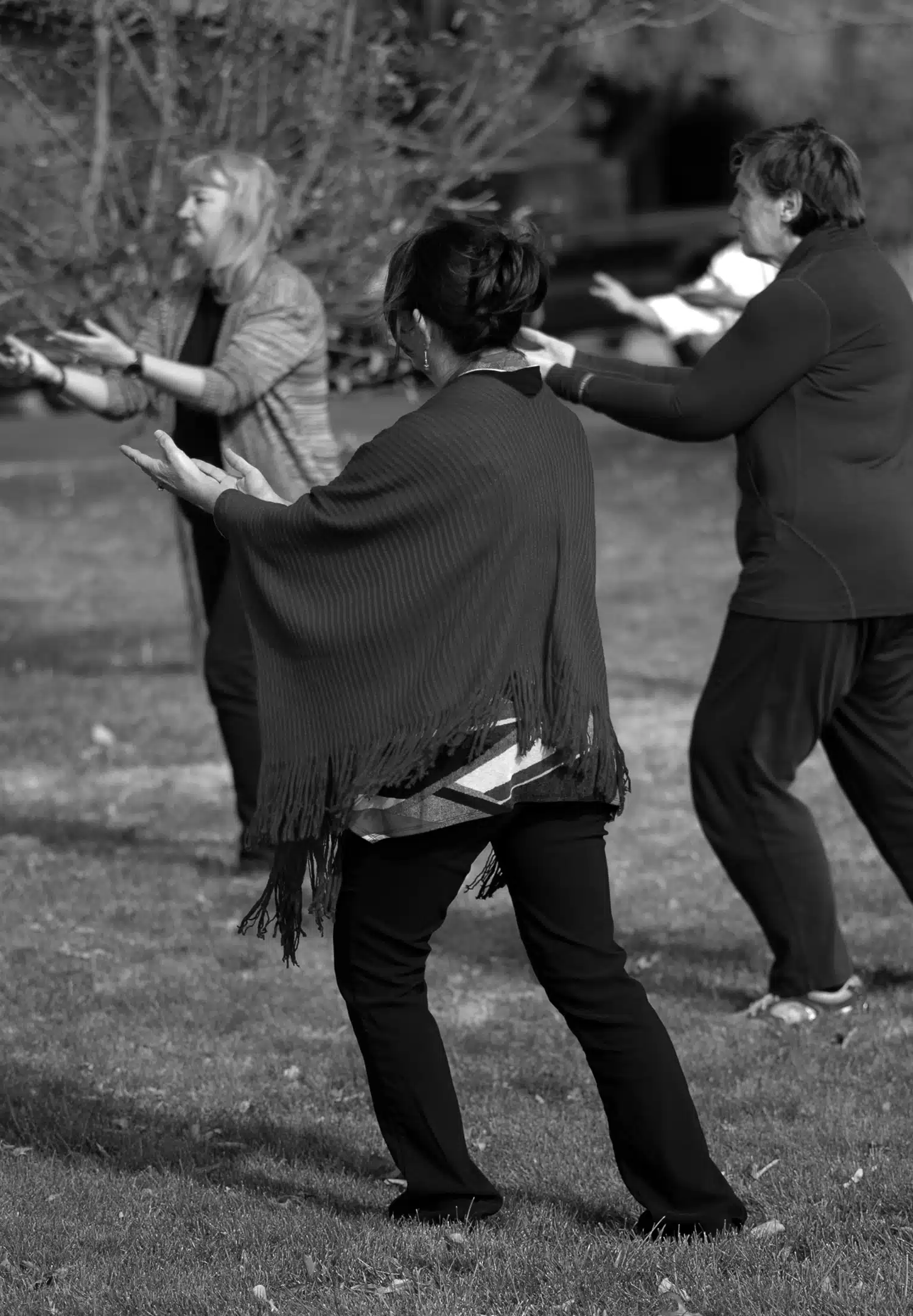
In a recent workshop, another teacher pointed out that my hands should be open. I had thought they were, but when I looked down my fingers were indeed slightly curled, and when I began paying attention, I found that often they were this way. I could open them, but it took a little bit of effort, which of course we don’t want. I was trying to find a “happy medium” a couple of weeks later in a gathering with my teacher, Marie. I commented that it felt as if I were holding my hands open using muscles. As soon as I relaxed them, they wanted to curl closed.
She experimented with a couple of movements, and then replied something like, “No, it’s not effort for me, but it takes a lot of presence in my hands to allow them to be open.”
“I thought we stayed in our feet,” I replied.
“Of course. We are always in our feet,” she answered. “But there is awareness in the hands.”
I pondered this. There seemed to be something key I was missing. I thought back to an appointment I had had with my physical therapist. I’ve struggled with nervous system issues for a while, so while it wasn’t the main point of the visit, she had given me an exercise to deactivate the sympathetic nervous system (fight or flight) and activate the parasympathetic system (which restores the body to a state of calm and allows it to repair).
The exercise involved lying face up and splaying the hands open to the side, palms completely flat, and pointing my toes, while holding a thought or feeling of gratitude. She explained that we want to have the body (and mind) do the opposite of what it would do in fight or flight, such as flexing the feet to be ready to run, and holding gratitude to combat worry. When I did the exercise, at the beginning it was always difficult to remember to flatten my palms. I wondered if this could this be related, so I did little online research. A fascinating article confirmed that contraction of muscles in the hands (among other places) is one of the effects of sympathetic nervous system activation. Aha. That certainly explained why “trying” to open my hands was counterproductive.
During the worst of my illness, I had practiced letting go of nervous system activation, by not just relaxing my body, but by relaxing my thoughts. It was tricky, like trying not to think of white elephants. When I get busy, I fall back into habits of wanting to be ready for whatever is coming next, whether the transition in a movement or the next family crisis. Despite knowing not to “anticipate” in T’ai Chi Chih, despite knowing that worry about the future hurts my health and is counterproductive toward my goals, the habit creeps in. Letting go of this “readiness to action” feeling (a type of stress) was the key.
I began to practice allowing my hands to open,asking them to open, while mentally reminding myself that I was safe, surrounded by nonjudgmental people who have my back, and that I didn’t have to be in any moment except the present one. When I managed to combine this letting go with sinking into my feet, and at the same time maintaining awareness in my hands, something interesting happened. Polarity that had been sporadic and flighty, strengthened and took on a more magnetic feel, and, look, my hands were solid, soft and open – all without effort. Magic.
The value of this learning was not only the enhancement of my practice, but that it gave me a tool for recognizing and self-correcting through the day. Once again, the practice was my teacher. The Chi was teaching me another level of how to let go – not in some abstract sense, but very concretely. It would say: almost… keep going… there! … It feels like that. See? You can do this. Relax; I’ve got you.” Over and over I have gotten lessons about life from my TCC practice that I may not have identified or understood otherwise. One of those gifts is a way to joyfully practice letting go of tendrils of nervous system activation, which I notice through my curled hands.
Topics: Colorado, Deepening Practice, Letting Go, Personal Stories, Present Moment, Softness and Continuity, Stress Relief
Originally appeared in: February 2017