
Categories: Knowledge & Wisdom from the TCC Guide
Building Community In Class
By: Sandy McAlister
Hayward, California
As practitioners of T’ai Chi Chih we know of the many ways the practice benefits us. We have read the studies touting the medical, emotional and practical effects of regular practice. We do not even have to do the movements well to get benefits. Of course, the closer we adhere to the form and principles of movement the more thoroughly the Chi will flow and balance.
Besides learning how to move well we also work with training the mind – paying attention to passing thoughts and the wandering mind. We practice recognizing and then letting thoughts go, continually bringing our awareness back to the present. Paying attention to the mind and its machinations helps us understand more about who we are.
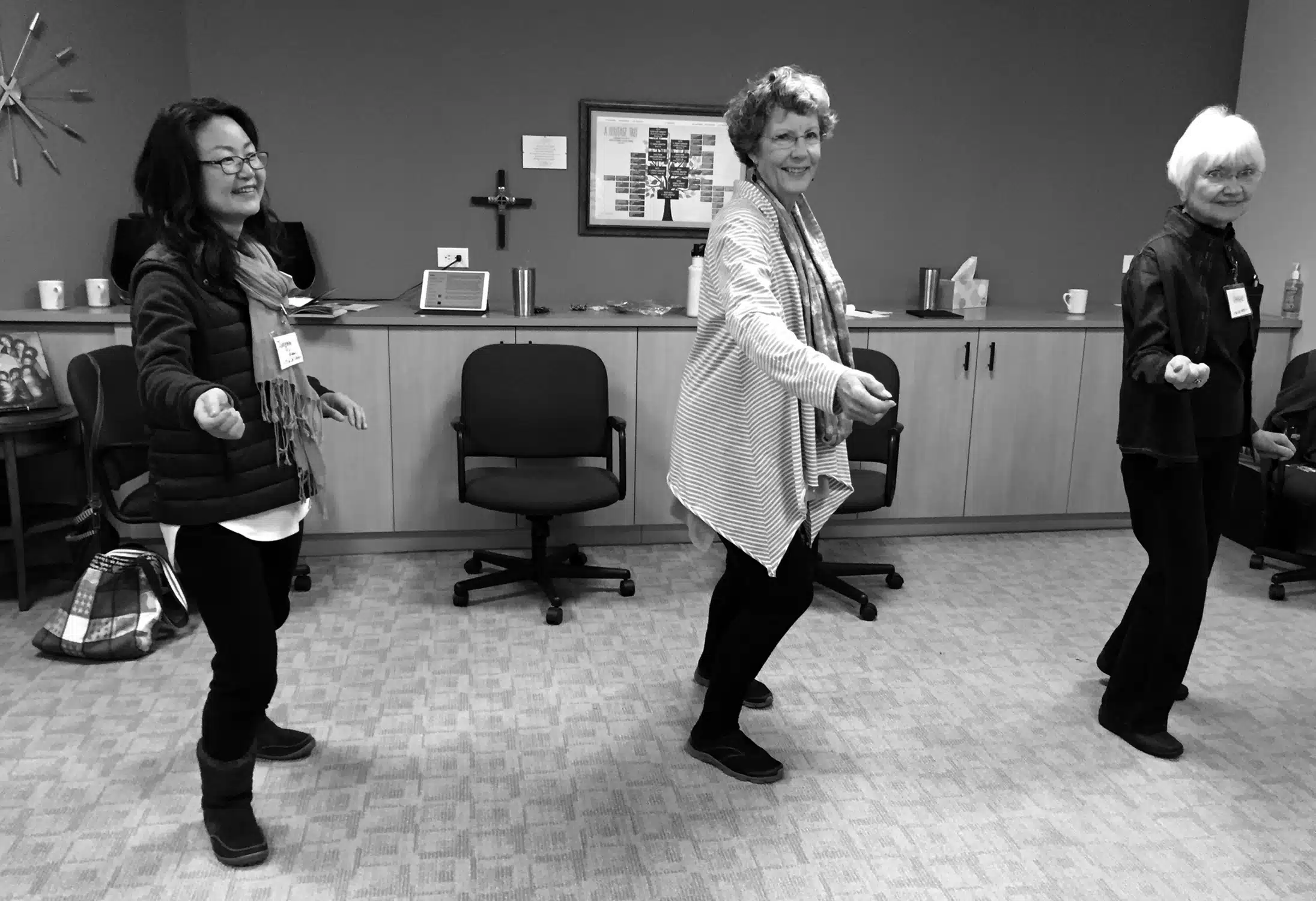
Another component I bring into my classes is one of building community. I mostly teach continuing classes, with generally the same people attending each time and new ones periodically joining. One class is at a senior center, another is in a retirement facility of 300 and another a retirement community of 10,000. In each of the three classes there is already a common thread that connects the students.
Creating community in our classes can achieve three things: it enriches the class experience, it broadens our TCC learning and it connects us with people and the larger picture beyond ourselves.
Usually classes start with sitting in a circle. I ask if anyone has good news. It can range from the personal (such as a new grandchild or family wedding, planting the vegetable garden, a recommendation for a just-read-book about the local Indian tribe, a vacation coming up or just finished) to local upcoming events. As the participants get to know about each other, connections and friendships are made. There is a feeling of shared acceptance. I can usually count on at least two or three people speaking up each time. I’ve noticed students exchanging books, a couple of them going out to breakfast after class, others making dates to attend a class or event they both had an interest in.
As students become more comfortable with each other they are more likely to speak up and comment when I ask questions about TCC. After the “good news” I shift the class to TCC. I may ask the students a question such as, “why do we strive for softness in our TCC practice” or “how does the practice make you feel” or “what is your favorite movement and why”? I am often amazed at their depth of understanding, and I would never have known the degree of learning they had absorbed if I had not asked them questions. Their answers enrich the learning experience for all attending and often lead to wonderful discussions. Part of what is happening as we listen is learning to be more present with others. I feel each gift of opening up and sharing of thoughts is met with respect. We begin to see that we are not so different and feel a kinship in supporting each other.
One of my students had become quite a recluse. Going to church was about the only social thing she did. She saw the TCC class advertised at the local senior center and came in hopes of improving her balance. She says the class has truly changed her life. She has joined an exercise class, a singing group and has a couple new friends that she often goes out to breakfast with after class. This week she is venturing out on her first cruise and vacation in many, many years. She says it is the TCC that has given her confidence to step out of her comfort zone, and also the people in her TCC class that support her.
While TCC is not a social club, the practice can be an avenue to connecting with something greater than ourselves. We get in touch with our inner voice. Barriers of resistance and self-protection fall away allowing us to see more clearly life around us, our roll in life – and how we fit into the bigger picture of all that is past, present and future. Building community in our TCC classes enriches the whole experience of learning and practicing TCC.
Topics: Building a Class, California, Group Practice, Present Moment, Running a Class, Senior Communities
Originally appeared in: August 2018