
Categories: Teacher Experiences & Reflections
Teaching Underserved Latino Community
“T’ai Chi Chih points out the way to serenity and fulfillment while living in the mist of busy worldly conditions.” Justin Stone
As a Spanish-speaking immigrant from Colombia and a psychologist, I have devoted 30 years of my academic life to developing programs for the San Francisco Latino community. During the past five years, I have taught T’ai Chi Chih (TCC) as an instrument to improve Latinos’ mental health.
Spanish-speaking immigrants face unique challenges when arriving to the San Francisco Bay Area. Many live under stress, poverty, and discrimination. To reach out to this population, I have partnered with two organizations: Galería de la Raza in San Francisco and the Berkeley Unified School District Family Engagement and Equality Program.
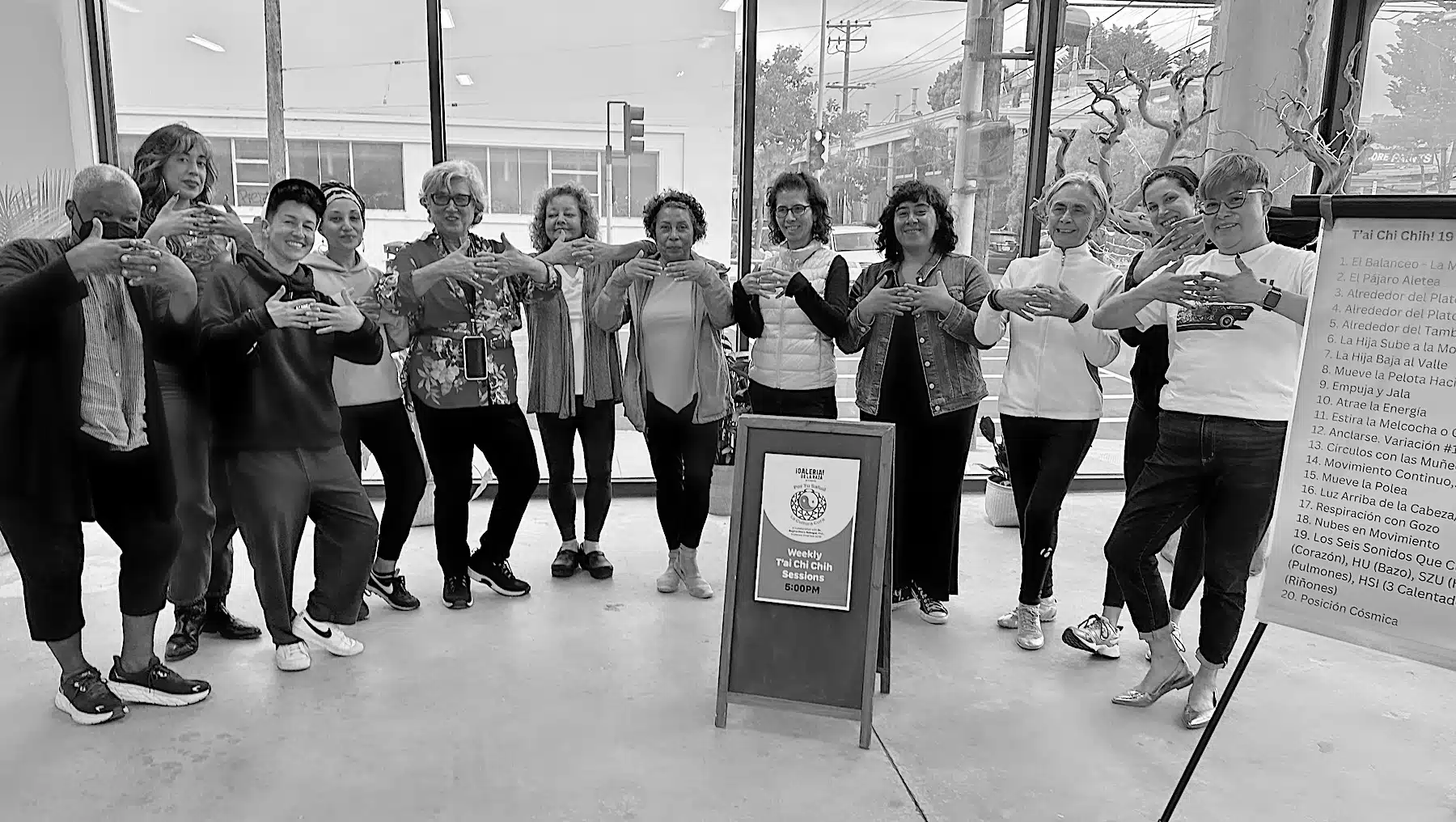
Galería de la Raza serves the Mission District Chicano and Latino population who are trying to survive in a new country. Galería’s director is supportive for us to offer TCC classes under a program “La Cultura Cura” (Your Culture Cures You), dedicated to improving Latino’s mental health. Galería provides a space to teach TCC within “Casa Adelante” (Home Forward), an affordable housing project. Initially, my challenge was recruiting residents. Although I had their contact information, I had to be persistent and considerate of their busy schedules. The most important lesson for me was not giving up.
What worked? Joining the housing project meetings, having one-on-one conversations with residents, asking social workers for referrals, distributing flyers on the street, and utilizing social media to attract residents. It helped foster a friendly, family-style atmosphere. Asking residents to invite friends and family also worked. I knew it was just a matter of time before participants would share information with others about the free new relaxation class (where they also socialized and ate free traditional food).
There is not a simple way to recruit. It helps letting the community get to know you as a kind and respectful teacher, one who speaks their language and knows their traditions. Classes will continue throughout the year with Galería de la Raza’s sponsorship.
The nationwide program, Berkeley Unified School District’s Latino Family Engagement and Equity Program, provides support to immigrant Spanish-speaking parents. I started teaching TCC a year ago at Berkeley’s elementary school district. By integrating TCC, taught in Spanish, into the school during regular weekly meetings, we’ve created a space for parents to address their stresses.
I feel fortunate to teach TCC classes incorporated into the Equality program. The classes are taught in Spanish and parents know each other. I feel I’m part of their group. Parents’ sense of belonging to a supportive and relaxing class is important. It allows them to discuss how TCC helps them to manage their stress at home and at work.
Summary of What Works
• Family holds a sacred place in the Latino culture, serving as its cornerstone. I welcome my students to class as a family and extend the invitation to their entire household: husbands, abuelos (grandparents), and children. After class, family and neighbors gather to share empanadas and friendly conversation.
• Inclusion. Everyone is encouraged to participate whether they join the movements or prefer to be seated. Handouts are provided in English and Spanish.
• Simpatia (harmony) is another cornerstone value among Latinos. I create a welcoming environment by using name tags and addressing each participant by name. After class, participants share what they like or don’t like about the class and provide suggestions.
Teaching TCC at these two large and diverse Spanish-speaking communities has been challenging and fulfilling. I have learned to adjust on my journey as a teacher. It humbles me and reaffirms the importance of going beyond my comfort zone to teach TCC.
Topics: Building a Class, California, Personal Stories, Running a Class, Schools and Children, Stress Relief
Originally appeared in: November 2024