
Categories: Teacher Experiences & Reflections
To Sit or Not to Sit? That is The Question
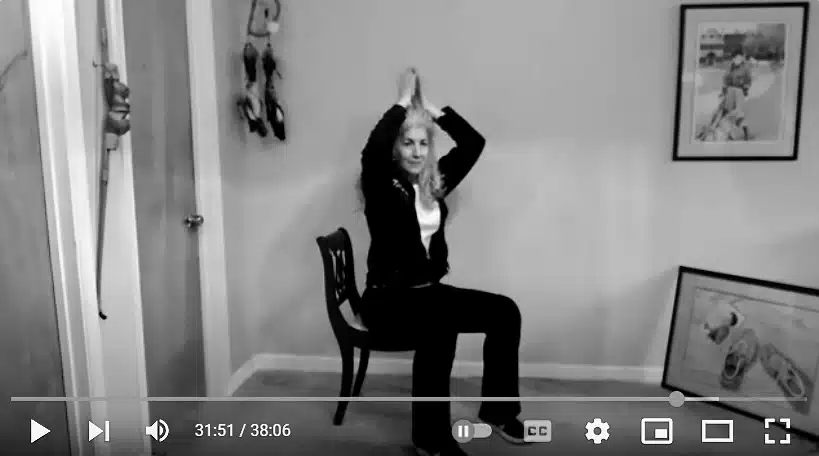
With some shame I’ll admit that for the first few years of my own T’ai Chi Chih (TCC) journey I thought the seated practice was basically TCC light. All that changed about seven years ago when I struggled with a painful condition on three right toes, making it extremely difficult to bear any weight on that foot. As my Southern Baptist mother would say, that’s when I “got religion” about the value of seated TCC.
I can’t tell you how often I’ve heard other teachers (many with 20 to 40 more years of experience than I) essentially sharing the same experience or discovery. Is it possible that the community, somehow collectively subconsciously, believe that seated TCC is less valuable than the standing practice?
These experiences have informed my personal practice and teaching: nowadays I sometimes do the seated practice on my own just for fun (remember the subtitle: Joy Through Movement). I also often start my new students in a chair and progress them to standing (regardless of their mobility). Here’s why:
• One doesn’t have to have a mobility issue (or be old or feeble) to suddenly be unable to walk. The problem I had with my foot is a great example of that scenario. Another example? My best friend (an otherwise super-fit young woman) slipped off the wet bottom stair on her way out the backdoor to walk the dog and broke her ankle. Truth is, lower extremity injuries often just happen (with no warning at all).
• It’s good idea for teachers to know how to teach seated and standing students at the same time. Therefore, teaching all your students how to do the seated form (and doing it that way with them from time to time) enables you to be much more flexible and responsive to the needs of the students on any given day. (In the end doesn’t this just make you a better teacher?)
• Most importantly, doing the movements from a chair gives even the greenest students more information about the tan t’ien more quickly than anything else.
• I’ve noticed it’s easier for students to connect their arm gestures in all the movements with their tan t’ien when seated (which is all-important). Wouldn’t it be fun if we never had to coach folks again how not to let their arms take off or do their own thing during Daughter on the Mountaintop and Daughter in the Valley?)
• Although seated TCC sort of eliminates the legs from the picture, it also provides valuable info about the legs (which will be useful later during the standing practice).
I’ve come to value teaching U.S. military veteran students the seated form from the get-go. For them, it seems even more appropriate than when I’m teaching the general population, since many have become curious about TCC specifically because of mobility issues. (For the last five-plus years, I have observed TCC practice consistently proving itself as the most universally healing modality for these folks.)
Rather than simply trusting TCC teachers will eventually find the seated practice (most likely as a result of some unfortunate personal circumstance), I vote for focusing a chunk of every accreditation week to training in the seated practice or at least including Sandy’s video (still the gold standard) into the fantastic package of official materials from Justinstonetcc.com, at 60% off for all newly accredited teachers. What do y’all think?
Topics: Adapting the Practice, Delaware, Seated T'ai Chi Chih, T'an T'ien, Teacher Accreditation, Teaching Beginners, Veterans
Originally appeared in: May 2025